
How to Start a Coffee Shop: 10 Steps for First-Time Owners
Starting a coffee shop? Follow 10 plain-English steps, from picking your concept and budget to permits, suppliers, staff and finding customers before day one.
Start for Free
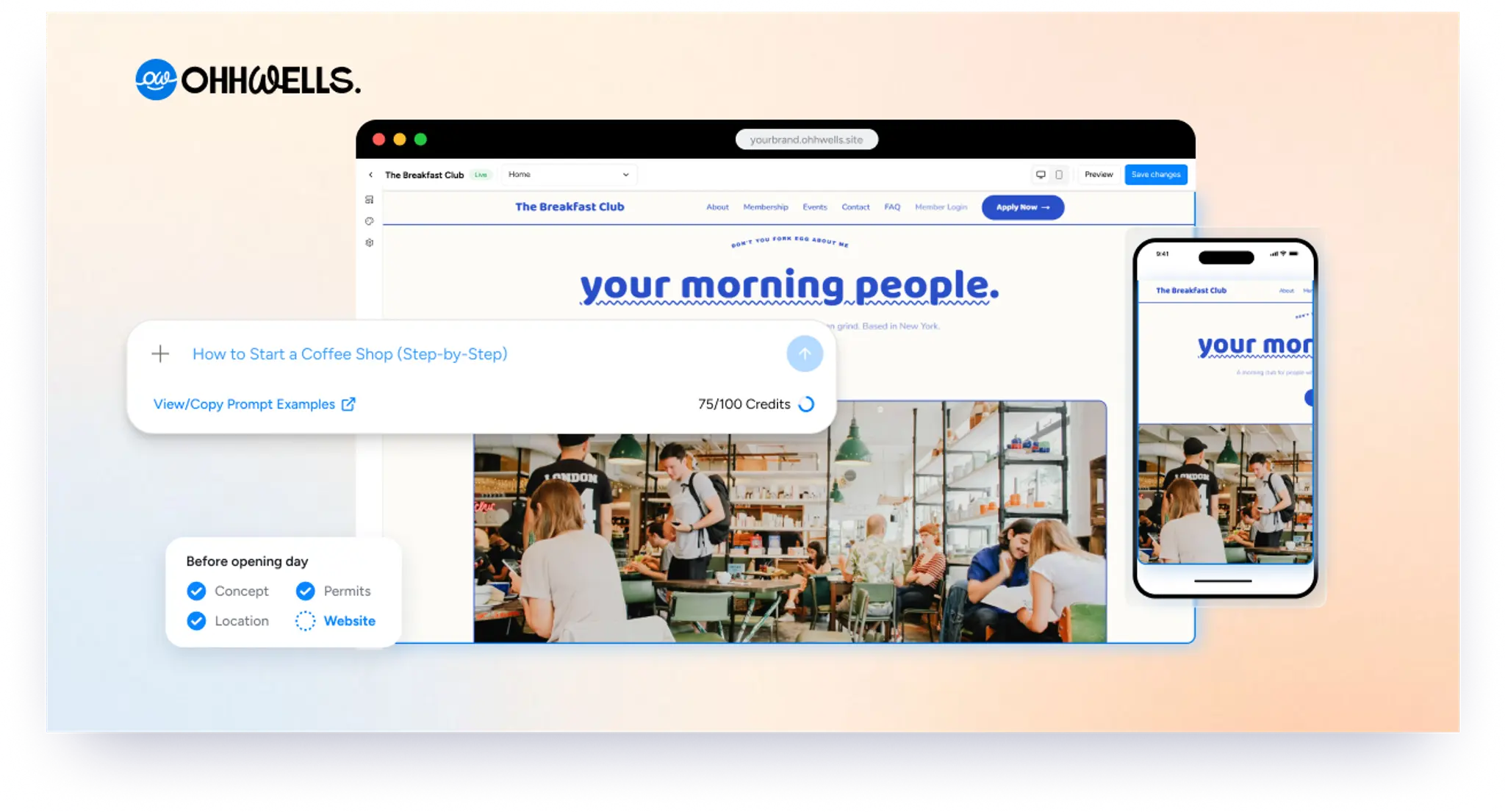
In short
To start a coffee shop, you need five things: a clear concept, a realistic budget, a good location, the right permits and a way for people to find you. Test your idea small first, and work out your break-even number before you sign a lease. OhhWells is an AI website builder that keeps every page of your site on-brand.
Key takeaways
- Decide your concept first: a kiosk, a sit-down café and a specialty coffee bar are very different businesses.
- Test demand with a market stall, pop-up or coffee cart before you sign a lease.
- Your break-even number (how many cups a day you need to sell) is the most important figure in your business plan.
- Check permits with your local council before signing a lease, because some spaces can’t legally serve food.
- Add 10–20% to your budget for surprises, since renovations almost always run over.
1. Pick your concept
Decide what kind of coffee shop you are before you spend anything. A grab-and-go kiosk, a sit-down café and a specialty coffee bar are very different businesses.
Ask yourself: who is my customer, and why would they pick me over the café down the road? Write the answer in one sentence. You'll reuse it on your menu, signage and website.
2. Test the idea small
You don't need a shop to test demand. Try a weekend market stall, a pop-up or a coffee cart first.
This tells you what people order, what they'll pay and whether they come back. It also starts building a following before you sign a lease.
New to carts? See our guide on how to start a coffee cart business.
3. Write a simple business plan
A business plan doesn't need to be 40 pages. Cover these basics:
- Who your customers are
- What you'll sell and at what price
- How much it costs to open and to run each month
- How many cups a day you need to sell to break even
The break-even number is the most important one. If it looks impossible, change the plan now, not after opening.
4. Sort out your funding
Most owners use savings, a small business loan, family support or a mix. Keep a buffer for slow early months. Many cafés take time to build regular customers.
5. Choose your location
Location drives most of your sales. Look for foot traffic, nearby offices or homes, and parking or transport links.
Visit the spot at different times of day. Count how many people walk past in the morning, when coffee sales peak.
6. Get your licences and permits
Rules differ by country and city. Common ones include a business registration, a food business licence, health and safety checks, and signage approval.
Check with your local council or food authority before you sign a lease. Some spaces can't legally serve food.
7. Fit out your space and buy equipment
Your biggest equipment cost is usually the espresso machine and grinder. You'll also need fridges, a dishwasher, furniture and a point-of-sale (POS) system for taking payments.
Buying good second-hand equipment is a common way to save money early on.
8. Find your suppliers
Choose a coffee roaster you like, and taste before you commit. Many roasters also offer barista training and equipment support.
You'll also need milk, cups, pastries or food, and cleaning supplies.
9. Hire and train your team
Friendly, consistent staff keep customers coming back. Train everyone on drink recipes so every latte tastes the same, whoever makes it.
10. Get the word out before opening day
Don't wait until you open to find customers. Start a few weeks before:
- Set up a simple website with your menu, opening hours and location
- Create a Google Business Profile so you show up on Google Maps
- Post behind-the-scenes photos on Instagram
- Plan a soft opening for neighbours and local businesses
What it costs to start a coffee shop
Costs vary a lot by city and size, so use this as a checklist to price out locally. Split your costs into one-off startup costs and monthly running costs.
Tip: add 10–20% on top of your total for surprises. Renovations almost always run over.
What your coffee shop website needs
Most people check a café online before they visit. A simple website answers their questions and makes you look established from day one.
Your coffee shop website should have:
- Your menu, with prices, so people know what to expect
- Opening hours and location, with a map
- Photos of your space, drinks and food
- Your story: what makes your coffee different
- A way to get in touch for private events, catering or questions
- Bookings if you run workshops, cuppings or space hire
You don't need a web designer for this. With OhhWells, you describe your café in a sentence or pick our coffee shop website template. You get an on-brand site you can edit yourself, using AI prompts or quick no-code edits.
Start with the coffee shop template for free
See templateFrequently asked questions

Keep reading
How to Start a Coffee Roasting Business (Starting Small)
Turn your roasting hobby into a business. 8 beginner-friendly steps on roasting space, green beans, permits, packaging and finding your first customers.
How to Start a Mobile Coffee Cart Business (Step-by-Step)
Start a coffee cart without a lease. Follow 8 plain-English steps on setup, equipment, permits, pricing and getting booked for markets and events.
How to Start a Home Bakery: 6 Steps to Your First Orders
Want to sell your bakes from home? Follow 6 simple steps: check local food rules, pick a small menu, price properly, and take your first orders online.
Claude Website Builder: Build, Publish & Edit a Site (2026)
Yes, Claude can build your website. Learn how to build one with Claude Code, publish it on your own domain and keep editing it without code.
Best Time to Post on Instagram for Small Businesses (2026 Guide)
The best times to post on Instagram in 2026, day by day, plus a 2-week test to find your own best slots and how often a small business should post.
How to Let a Client Edit a Vibe-Coded Website Without Breaking It
Your client loves the site you built with AI, then the edit requests start. Here are 3 ways to hand it over so they can update it without breaking the design.