
How to Start a Coffee Roasting Business (Starting Small)
Turn your roasting hobby into a business. 8 beginner-friendly steps on roasting space, green beans, permits, packaging and finding your first customers.
Start for Free
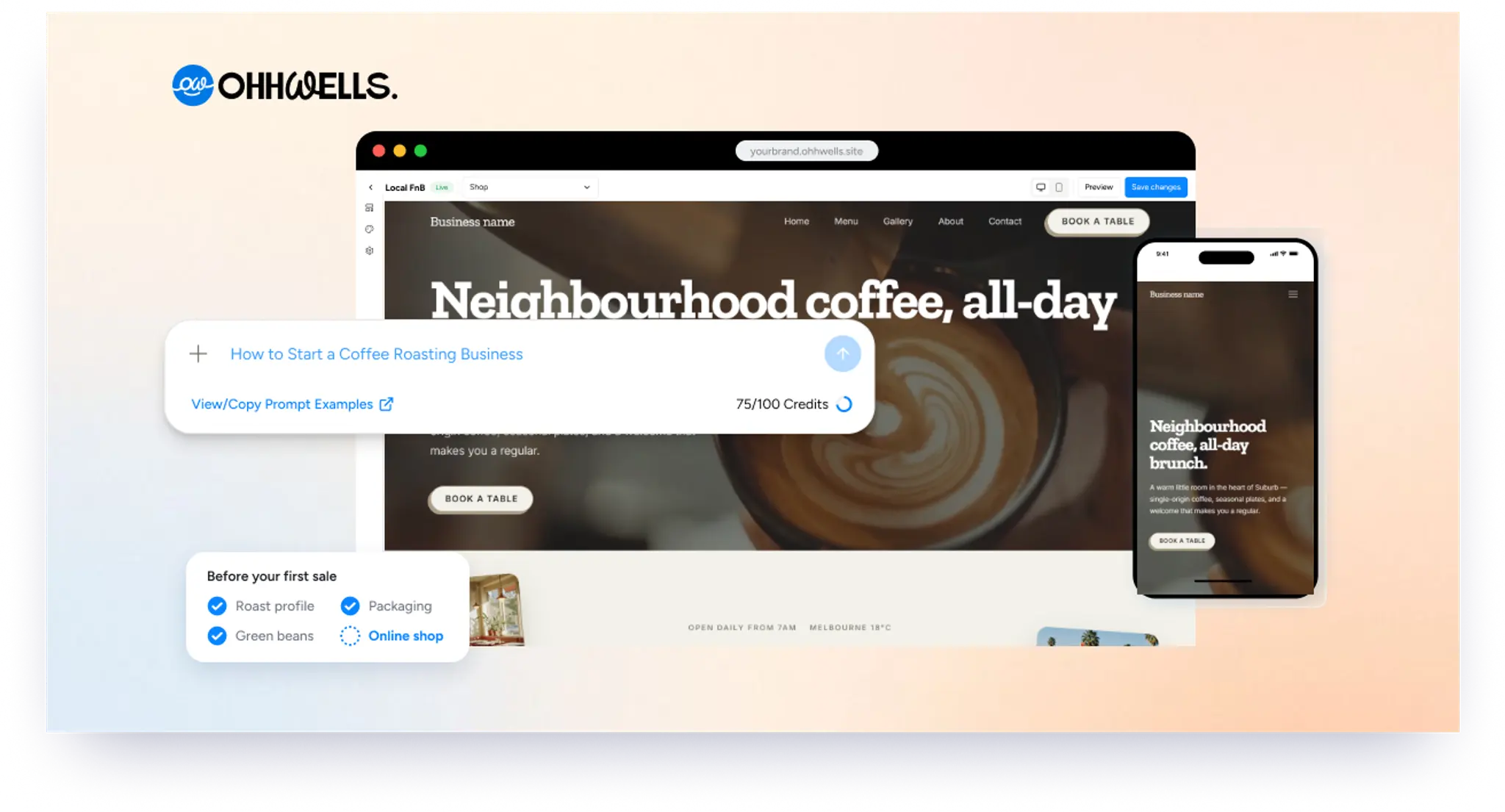
In short
You can start a coffee roasting business small, often by renting time at a shared roasting space before buying your own roaster. Begin with a few signature blends, sell them to people who already love your coffee, and grow from there. OhhWells is an AI website builder that keeps every page of your site on-brand.
Key takeaways
- Consistency is the skill customers pay for, so learn to roast the same way every time before you sell.
- Renting time at a shared roasting space is the lowest-cost way to start. A contract roaster or your own small roaster are the other options.
- Buy green beans in small sample batches, and roast and taste before ordering more.
- You’ll usually need a business registration and a food business licence. Check labelling rules with your local food authority.
- Small roasters sell through their own website, markets, local cafés, offices and subscriptions.
- Tastings and cupping workshops let people try your coffee before they buy.
1. Learn to roast consistently
Roasting good coffee once is easy. Roasting it the same way every time is the skill customers pay for. Take a roasting course or learn alongside an experienced roaster before you sell.
2. Pick your niche
What will you be known for? Single-origin beans, a house espresso blend, decaf done well, or coffee for home brewers? A clear niche makes your brand easier to remember.
3. Find a place to roast
You have three main options:
- Rent time on a roaster at a shared roasting space (lowest upfront cost)
- Buy a small roaster and set it up in a suitable space
- Use a contract roaster who roasts to your recipe
Roasting produces smoke and needs proper ventilation. Check local rules before roasting at home or in a shop.
4. Source your green beans
Green (unroasted) coffee comes from importers and green coffee suppliers. Start by buying small sample batches, then roast and taste before ordering more.
5. Sort out permits
You'll usually need a business registration and a food business licence. Your packaging may also need certain labelling. Check with your local food authority.
6. Design your packaging
Your bag is your shopfront. Include the coffee's name, origin, roast date and tasting notes. Use bags with a one-way valve to keep beans fresh.
7. Choose where to sell
Common ways small roasters sell:
- Your own website
- Weekend markets and pop-ups
- Local cafés that want a house blend
- Offices that want fresh beans
- Coffee subscriptions for regular customers
8. Start building a following
Share your roasting process on social media. Run small tasting sessions or cupping workshops so people taste your coffee before they buy.
Your roastery website
A website gives your coffee a home that you control, not just a social media page. A good small roastery website includes:
- Your story: who roasts the coffee and why
- Your signature blends, with tasting notes and photos
- A simple way to buy a few of your best-sellers online
- Wholesale enquiries for cafés and offices
- Bookings for tastings or cupping workshops
With OhhWells, you can build this without a developer. Start from our coffee website template, make it match your brand, and sell your signature blends with a simple shop on a paid plan.
Start with the coffee website template for free
See hereFrequently asked questions

Keep reading
How to Start a Mobile Coffee Cart Business (Step-by-Step)
Start a coffee cart without a lease. Follow 8 plain-English steps on setup, equipment, permits, pricing and getting booked for markets and events.
How to Start a Home Bakery: 6 Steps to Your First Orders
Want to sell your bakes from home? Follow 6 simple steps: check local food rules, pick a small menu, price properly, and take your first orders online.
How to Start a Coffee Shop: 10 Steps for First-Time Owners
Starting a coffee shop? Follow 10 plain-English steps, from picking your concept and budget to permits, suppliers, staff and finding customers before day one.
Claude Website Builder: Build, Publish & Edit a Site (2026)
Yes, Claude can build your website. Learn how to build one with Claude Code, publish it on your own domain and keep editing it without code.
Best Online Store for Small Business in 2026 (Honest Comparison)
Shopify, Wix, Squarespace, Big Cartel or OhhWells? Compare prices, product limits and bookings to find the right online store for your small business.
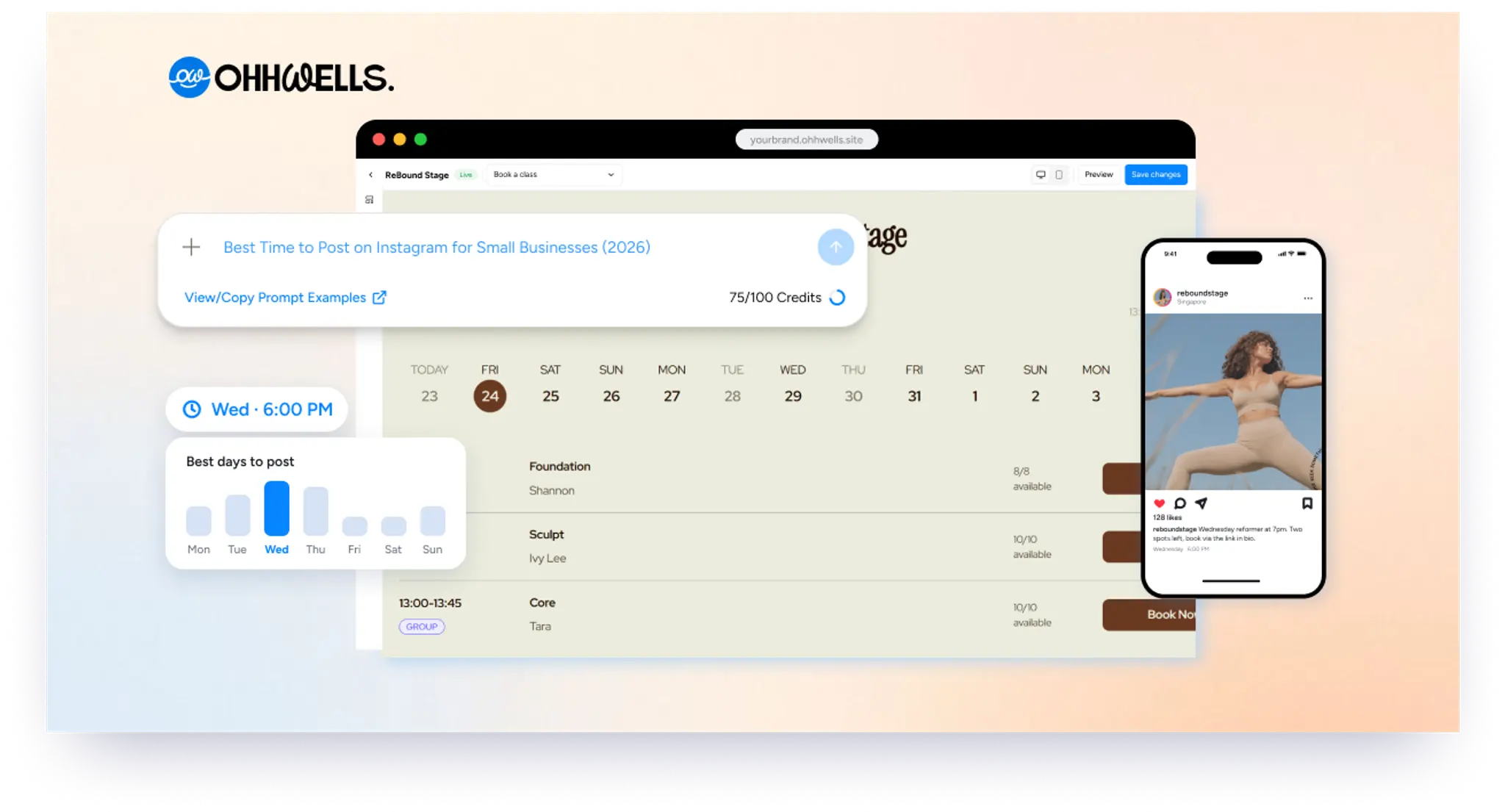
Best Time to Post on Instagram for Small Businesses (2026 Guide)
The best times to post on Instagram in 2026, day by day, plus a 2-week test to find your own best slots and how often a small business should post.