
How to Start a Home Bakery: 6 Steps to Your First Orders
Want to sell your bakes from home? Follow 6 simple steps: check local food rules, pick a small menu, price properly, and take your first orders online.
Start for Free
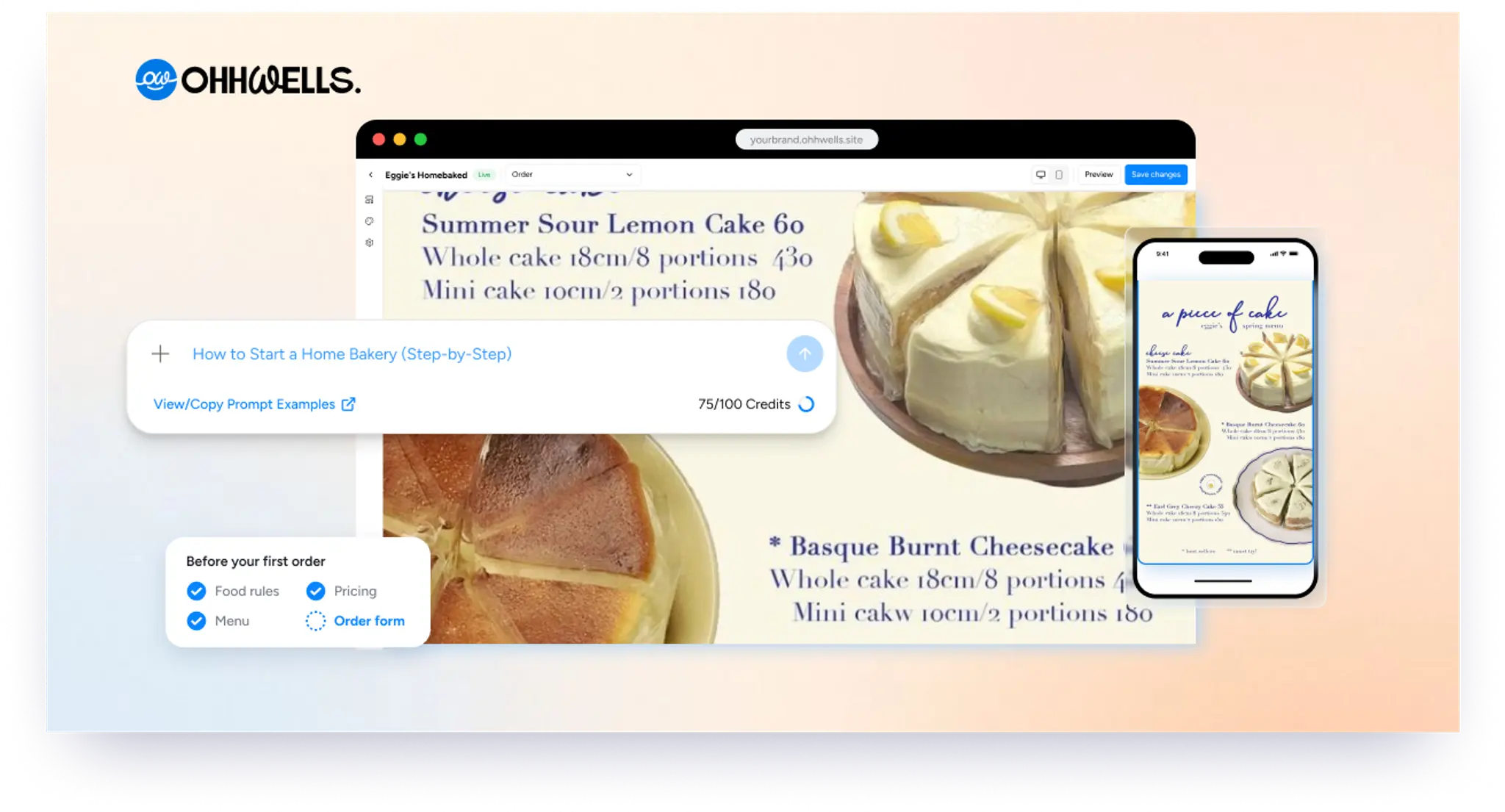
In short
To start a home bakery, check the food rules where you live, choose a small menu you can bake well, price it so your time is paid, and set up a simple way for people to order and pay. OhhWells is an AI website builder that keeps every page of your site on-brand.
Key takeaways
- Check your local home food rules before you sell anything. They differ by country, state and council.
- Start with 3 to 5 items you can bake well every time, and build a niche people remember you for.
- Price for your time, not just ingredients: add packaging, your hourly rate, running costs and profit.
- Set a minimum order and take deposits on custom cakes to avoid no-shows.
- Move orders out of your DMs: a simple website with a menu, order form and payments keeps things organised.
- Your first customers usually come from people who already know you, so start with friends, family and local groups.
To start a home bakery, check the food rules where you live, choose a small menu you can bake well, price it so your time is paid, and set up a simple way for people to order and pay. Most home bakers can do all of this in a few weeks with the kitchen they already have.
- Check the home food rules where you live
- Pick your niche and a small menu
- Price your bakes properly
- Set up your kitchen and packaging
- Set up ordering and payments
- Get your first customers
Step 1: Check the home food rules where you live
Selling food from home is legal in many places, but the rules depend on where you live. Check before you sell your first cake, not after.
Wherever you are, also check:
- Allergen labels: list common allergens like nuts, eggs, dairy and gluten.
- Food hygiene training: a short online course builds trust, even where it isn't required.
- Business registration: if you sell regularly, you may need to register your business.
- Insurance: ask your insurer about home business cover.
Step 2: Pick your niche and a small menu
Start with 3 to 5 items you can bake well, every time. A short menu is easier to shop for, price and deliver on time.
Pick a niche people can remember you for, such as:
- Custom celebration cakes
- Sourdough and bread
- Cookies and cookie gift boxes
- Gluten-free or vegan bakes
- Local or cultural bakes from your home country
Ask friends and family which bake they would actually pay for. The one they ask for again is usually your best seller.
Step 3: Price your bakes properly
The most common mistake is charging only for ingredients. Your price should cover your time too.
A simple way to price one item:
- Add up ingredients and packaging.
- Add your time: hours spent × the hourly rate you want to earn.
- Add a little for electricity, gas and wear on equipment.
- Add your profit on top.
Then look at what other bakers near you charge. If you are much cheaper, raise your price or make your offer more special, for example with custom designs or gift packaging.
Set a minimum order and ask for a deposit on custom cakes. This protects you from no-shows.
Step 4: Set up your kitchen and packaging
You don't need a commercial kitchen to start. You need a clean, organised space and a few basics.
- A dedicated, easy-to-clean area for baking
- Separate storage for business ingredients
- A kitchen scale and an oven thermometer for consistent results
- Boxes, bags or tins that keep bakes safe in transit
- Labels with your name, ingredients and allergens
Good packaging is also your first marketing. A nice box gets photographed and shared.
Step 5: Set up ordering and payments
Many home bakers start by taking orders in DMs. It works at first, then gets messy: missed messages, unclear details and chasing payments.
A simple website fixes this. It gives people one place to see your menu, place an order and pay.
What a home bakery website needs:
- Your menu and prices with good photos
- An order form that asks for the date, flavour, size and any allergies
- Online payment or deposits so orders are confirmed before you bake
- Pickup or delivery details and your order lead time
- Your story so people know who is baking for them
You can set this up in an afternoon with the OhhWells bakery website template. Pick the template, describe your bakery, and the AI fills it with your words while keeping your colours and fonts consistent on every page. Order form enquiries are emailed straight to you, and paid plans let you take payments through your own Stripe account.
Not ready for a full website yet?
Start with our free cake order form and share the link on Instagram or WhatsApp.
Start for freeStep 6: Get your first customers
Your first customers usually come from people who already know you. Start there, then widen out.
- Friends, family and neighbours: offer a launch week and ask them to share.
- Instagram and TikTok: post your bakes, short baking videos and happy customers. Put your website link in your bio.
- Local groups: neighbourhood Facebook or WhatsApp groups, school parents and office groups.
- Markets and pop-ups: check your local rules first, as some places restrict selling home bakes at events.
- Reviews: ask every happy customer for a short review and a photo.
Make it easy to order again. A clear website link beats "DM me for prices" every time.
Frequently asked questions

Keep reading
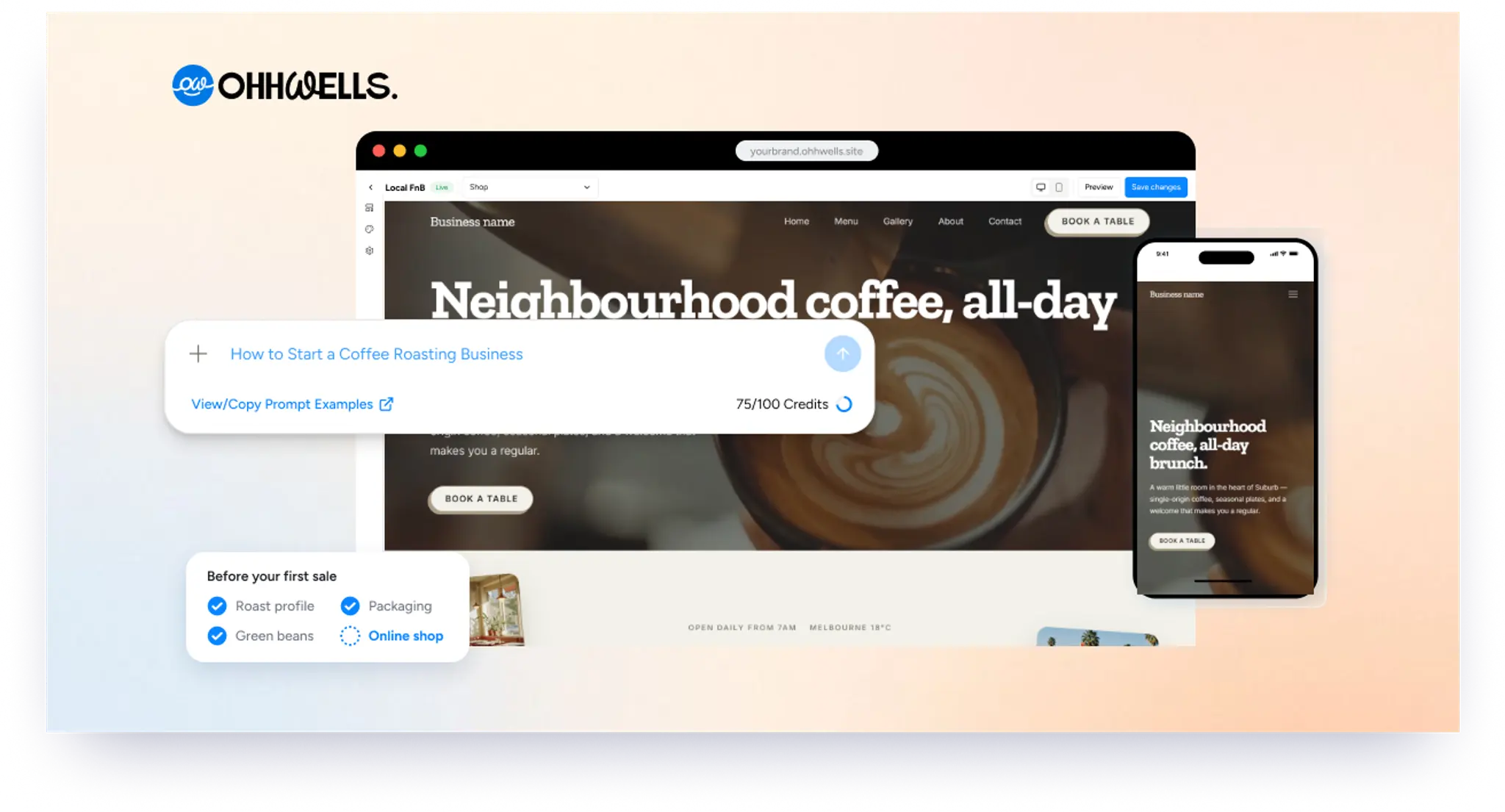
How to Start a Coffee Roasting Business (Starting Small)
Turn your roasting hobby into a business. 8 beginner-friendly steps on roasting space, green beans, permits, packaging and finding your first customers.
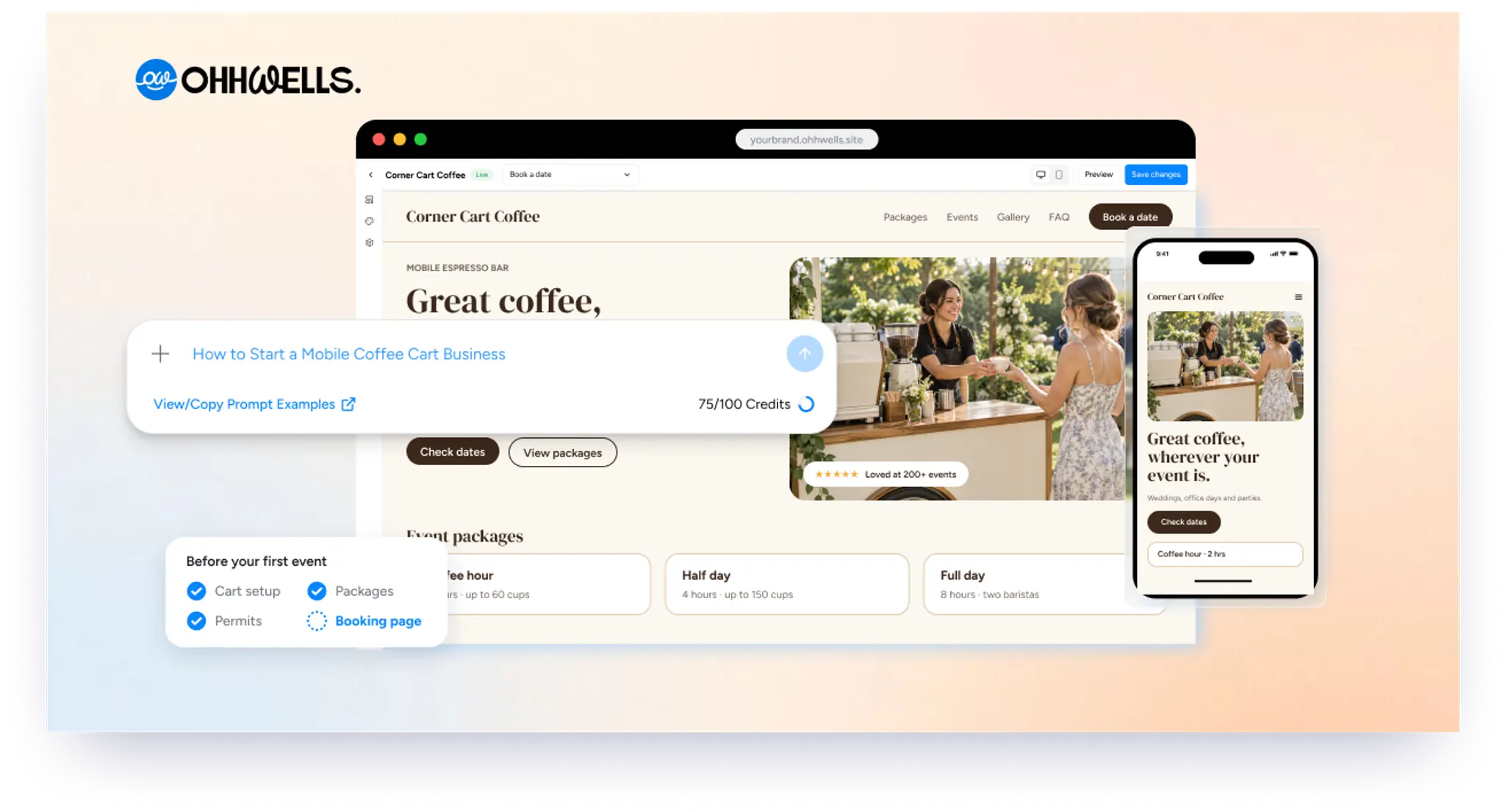
How to Start a Mobile Coffee Cart Business (Step-by-Step)
Start a coffee cart without a lease. Follow 8 plain-English steps on setup, equipment, permits, pricing and getting booked for markets and events.
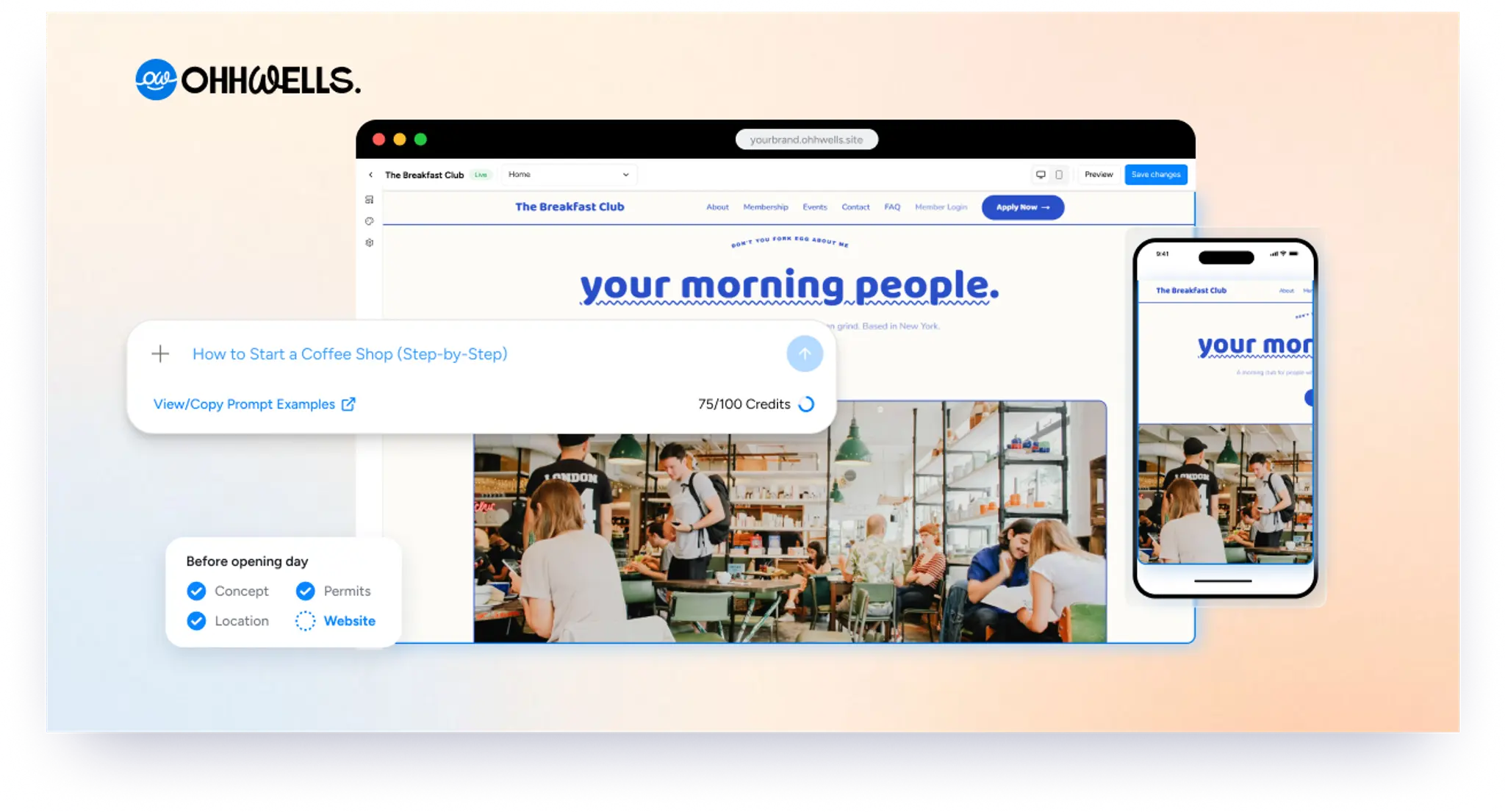
How to Start a Coffee Shop: 10 Steps for First-Time Owners
Starting a coffee shop? Follow 10 plain-English steps, from picking your concept and budget to permits, suppliers, staff and finding customers before day one.
Claude Website Builder: Build, Publish & Edit a Site (2026)
Yes, Claude can build your website. Learn how to build one with Claude Code, publish it on your own domain and keep editing it without code.
Best Online Store for Small Business in 2026 (Honest Comparison)
Shopify, Wix, Squarespace, Big Cartel or OhhWells? Compare prices, product limits and bookings to find the right online store for your small business.
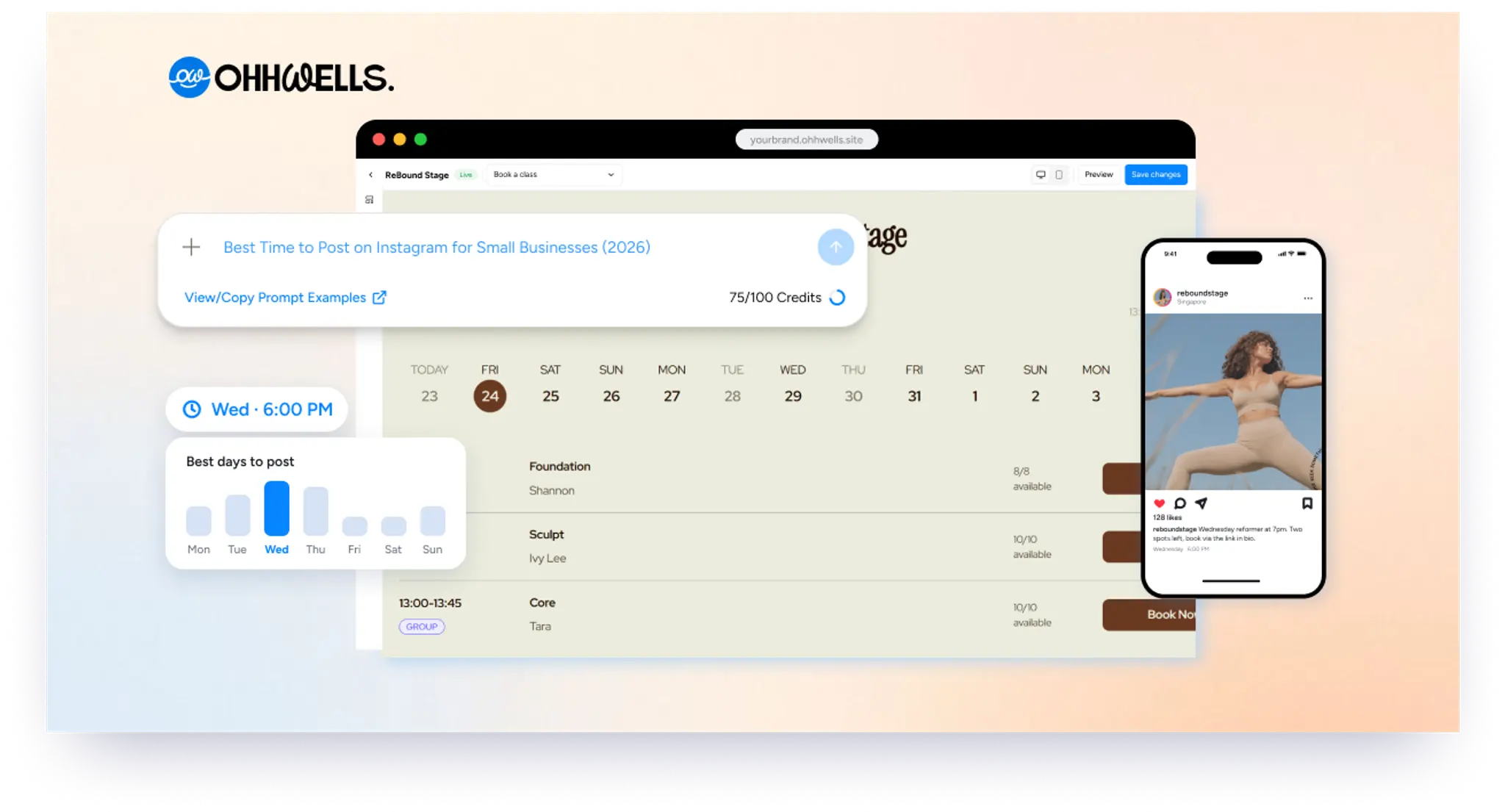
Best Time to Post on Instagram for Small Businesses (2026 Guide)
The best times to post on Instagram in 2026, day by day, plus a 2-week test to find your own best slots and how often a small business should post.