
How to Start a Mobile Coffee Cart Business (Step-by-Step)
Start a coffee cart without a lease. Follow 8 plain-English steps on setup, equipment, permits, pricing and getting booked for markets and events.
Start for Free
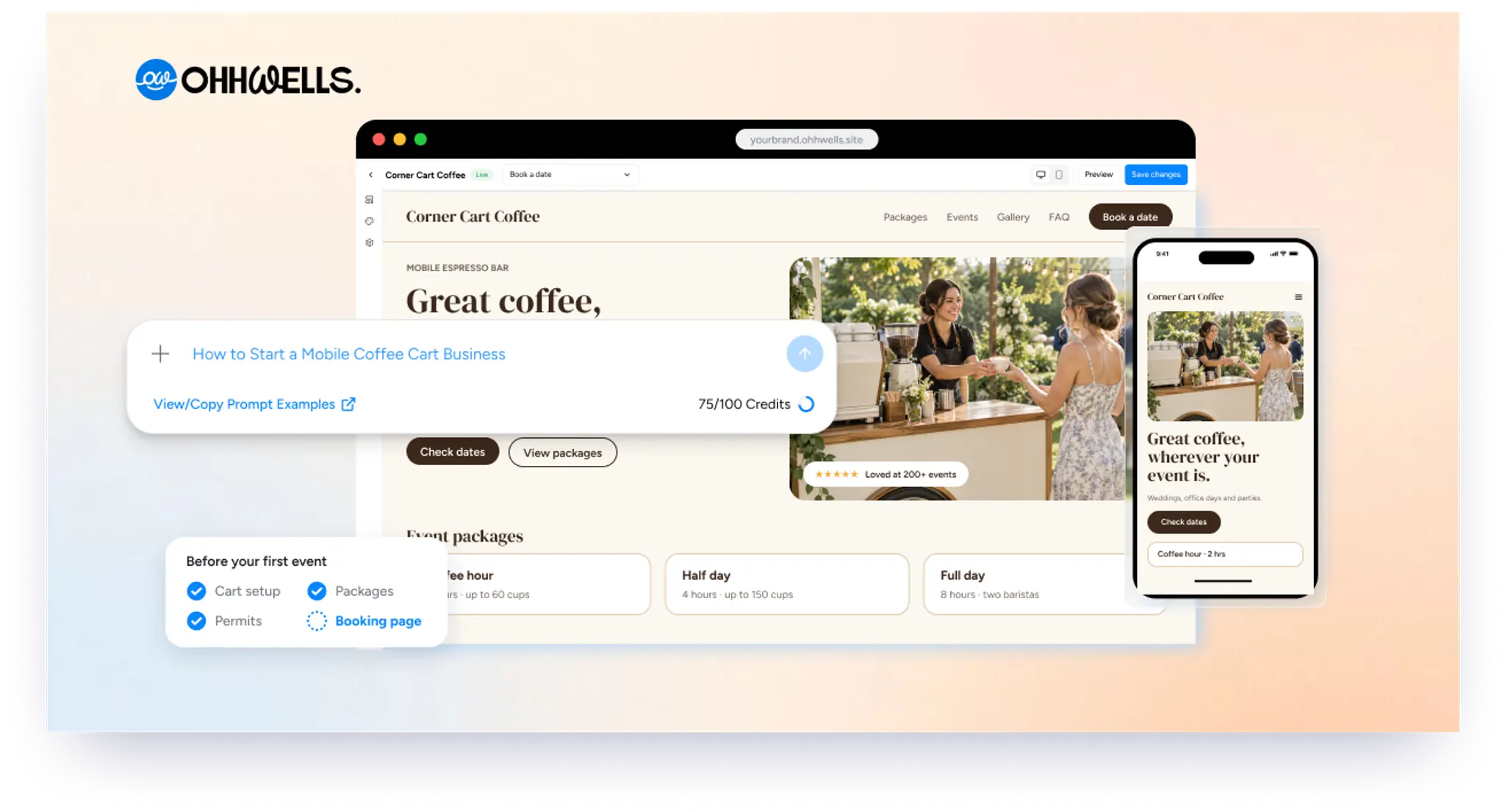
In short
A coffee cart is one of the lowest-cost ways to start a coffee business: no lease and no big renovation. Most carts earn from markets and event bookings, so you need a reliable setup, permits, clear packages and an easy way to book you. OhhWells is an AI website builder that keeps every page of your site on-brand.
Key takeaways
- A coffee cart skips the lease and renovation, so it costs much less to start than a café.
- Most carts earn from two places: selling at markets and busy spots, and getting booked for events.
- Event hire is often steadier income, because you know what you’ll earn before you show up.
- You’ll usually need a food business licence, a trading permit and public liability insurance. Check with your local council.
- Sell events as simple packages (set hours or cups, with add-ons) so clients can say yes quickly.
- A website with your packages, photos, service area and a booking form turns enquiries into bookings.
1. Decide how you'll make money
There are two main models:
- Street and market trading: you sell cup by cup to passers-by.
- Event hire: clients book you for a set fee or a number of cups.
Many carts do both. Event hire is often steadier, because you know your income before you show up.
2. Choose your cart setup
You can buy a ready-made coffee cart, convert a bike, trailer or small van, or rent one to start. Think about how you'll move it, where you'll store it and how you'll get power and water.
3. Get the right equipment
You'll need a commercial espresso machine and grinder, a power source (generator, battery or plug-in), water tanks, a small fridge and a card reader.
Check that your machine can keep up with a busy event queue. Slow service is the most common complaint at events.
4. Sort out permits and insurance
Rules vary by city. You'll usually need a food business licence, a permit to trade in public spaces, and public liability insurance. Event venues often ask for proof of insurance before booking you.
5. Set your prices and packages
For street trading, price per cup. For events, create simple packages, such as a set number of hours or cups, with add-ons like syrups or a second barista.
Clear packages make it easy for clients to say yes.
6. Build your brand
Give your cart a name, a look and a story. Your cart is a moving billboard, so make it recognisable in photos. Guests at events will post it.
7. Find your first spots and clients
Approach weekend markets, office buildings, gyms and schools. For events, reach out to wedding planners, event venues and local businesses.
Planning to open a shop later? See our guide on how to start a coffee shop.
8. Make it easy to book you
Event clients want to check your packages, see photos and book a date without a long email chain. That's where a website comes in.
How to get your coffee cart booked
A simple website turns "do you have a link?" into a booking. Include these on your site:
- Your packages and prices, so clients can compare quickly
- Photos of your cart at real events
- Where you travel to, so people know you cover their area
- A booking or enquiry form asking for the date, location and guest count
- Reviews from past clients
With OhhWells, you can launch this kind of site without a designer. Start from our coffee website template, make it match your brand, and take bookings for free (up to 20 a month). Online payments are on paid plans.
Start with the coffee website template for free
Start for freeFrequently asked questions

Keep reading
How to Start a Coffee Roasting Business (Starting Small)
Turn your roasting hobby into a business. 8 beginner-friendly steps on roasting space, green beans, permits, packaging and finding your first customers.
How to Start a Home Bakery: 6 Steps to Your First Orders
Want to sell your bakes from home? Follow 6 simple steps: check local food rules, pick a small menu, price properly, and take your first orders online.
How to Start a Coffee Shop: 10 Steps for First-Time Owners
Starting a coffee shop? Follow 10 plain-English steps, from picking your concept and budget to permits, suppliers, staff and finding customers before day one.
Claude Website Builder: Build, Publish & Edit a Site (2026)
Yes, Claude can build your website. Learn how to build one with Claude Code, publish it on your own domain and keep editing it without code.
Best Time to Post on Instagram for Small Businesses (2026 Guide)
The best times to post on Instagram in 2026, day by day, plus a 2-week test to find your own best slots and how often a small business should post.
How to Let a Client Edit a Vibe-Coded Website Without Breaking It
Your client loves the site you built with AI, then the edit requests start. Here are 3 ways to hand it over so they can update it without breaking the design.