In short
Bolt will build you a working app from one prompt. It's genuinely astonishing — right up until you're the one who has to finish it, host it, and pay by the token every time it goes wrong. OhhWells gives you the same describe-it-and-watch-it-appear feeling, and hands you a finished website that takes bookings and gets found. Flat price. No tokens. No half-built project.
If you're looking for a Bolt alternative, you've probably hit one of these
The first prompt is a genuine wow. Then, usually, one of these:
- It got to about 80% in twenty minutes and has been at 80% for three weeks.
- You noticed the same fix costs more than it used to. That's not your imagination — Bolt bills by tokens, and tokens scale with the size of your codebase, not just what you asked for. So the bigger your site gets, the more every single change costs. The meter punishes progress.
- You ran into the daily token cap on the free plan halfway through an afternoon and simply had to stop until tomorrow.
- Your worst days cost the most money, because debugging cycles burn tokens exactly like building does.
- You've got a working thing and no idea how to actually run it — hosting, domain, the database, keeping it alive. You wanted a website, not a codebase to look after forever.
- Somewhere in there you realised: this tool expects me to be technical. And I'm not.
That last one isn't a failure. Bolt is a developer's tool that happens to be usable by anyone for the first ten minutes. The first ten minutes aren't the job.
The problem isn't you. It's that Bolt's meter gets worse as your site gets better.
Bolt is a StackBlitz product, and StackBlitz builds developer tools. That's the whole explanation, really. It's an in-browser agent that writes, runs and deploys full-stack apps — React, Vue, Next.js, Supabase, Stripe, all of it — and for a developer who knows what to do with those words, it's a superb accelerator. Over a million sites have been deployed with it and that's deserved.
But look closely at the pricing mechanic, because it's the most important thing on this page. Bolt charges by tokens, and token consumption tracks the complexity and size of your project — not the size of your request. Which means the cost curve runs backwards from what you'd want: the further you get, the more each small fix costs. A typo on day one is cheap. The same typo on day thirty, on a bigger codebase, isn't. And because a bad debugging loop burns tokens whether or not it works, your most frustrating afternoons are also your most expensive ones. Add the free plan's hard daily cap and you get the experience people actually describe: unstoppable for an hour, then stuck, then out of tokens, then it's tomorrow.
Underneath all that is the deeper mismatch. Bolt hands you a project. A codebase, a repo, a thing that needs hosting and looking after. Everything between that and a business — being found on Google, taking a booking, knowing whether the page converts — is still yours.
OhhWells starts from the other end. Same feeling — describe what you want, watch it appear — but what lands is a finished website. Bookings are native. Pages are built to be indexed. And before you publish, the Conversion Score checks 32 factors across 8 dimensions and tells you plainly what to fix. The price is flat, so the hundredth change costs exactly what the first one did: nothing extra.
This isn't just a Bolt issue, either — most AI-generated sites end up looking the same regardless of which tool built them, for reasons baked into how these models are trained.
See your Conversion Score
Check for free →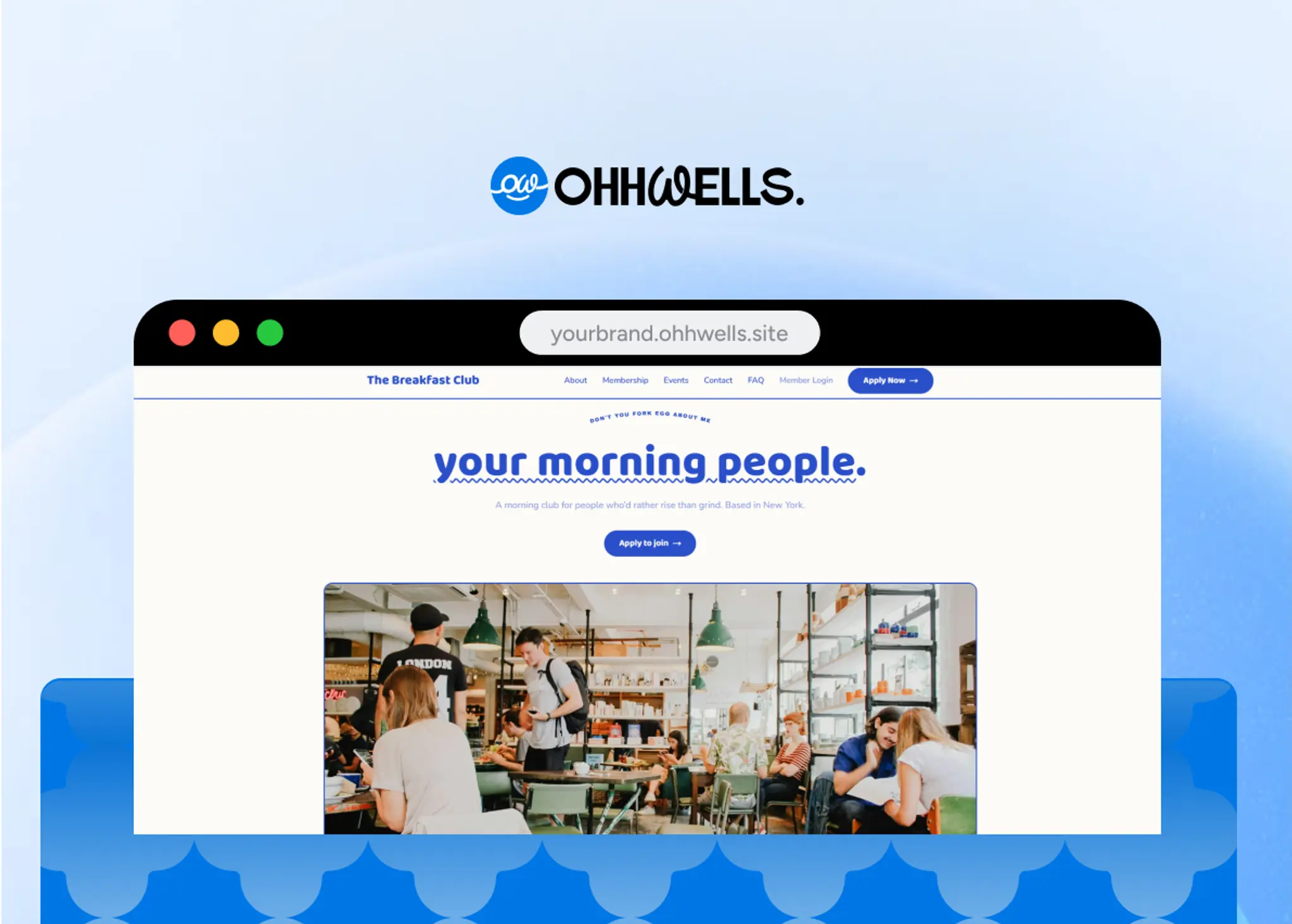
OhhWells vs Bolt, at a glance
Where each one really pulls ahead
Bolt is a seriously good tool. It's just built for someone else.
Raw capability. Bolt is full-stack in a way we will never be, and don't want to be. It'll stand up a database, wire Stripe, handle auth, build a mobile app through Expo, import from Figma, push to GitHub — from prompts, in a browser, with no setup. If you're building an actual application, or an MVP you intend to raise money on, Bolt is one of the best on-ramps that exists. Go and use it.
Finishing. This is the divide, and it's the one every honest review circles back to. Bolt gets you to a working project remarkably fast, and then the remaining work is developer work: deploying it properly, hosting it, keeping it running, fixing it when it breaks at 9pm on a Sunday. If you can do that, the speed is a gift. If you can't, you're holding something you can't put down and can't finish. OhhWells hands you a finished website. There is no remaining work.
The cost curve. Worth saying twice because it's so counterintuitive: with Bolt, costs scale with the size and complexity of your codebase. Your site working harder makes your site cost more to touch. That's a rational model for a developer tool billed on compute — and a genuinely bad fit for a small business, where the whole point is that the website is a fixed cost you stop thinking about. OhhWells is flat. Add pages, change your mind, fix things badly and then fix them again. The bill doesn't notice.
The free plans. Bolt's free tier is real and generous by developer-tool standards (1M tokens a month, capped at 300K a day), but it puts Bolt branding on anything you host and the daily cap is hard. It's for learning and experimenting — that's what it's for and Bolt is upfront about it. OhhWells' free plan is a published site you can run a business on, with the full editor, native bookings and the Conversion Score, and no daily wall to hit.
Knowing if it works. Bolt will build precisely what you describe, including a page nobody books from. It has no opinion on your call-to-action, your mobile experience, or the order of your homepage — that's not its job. The Conversion Score is that missing opinion: 32 checks, before you publish, in plain language. Bolt answers can it be built. We answer will it work.
Where Bolt is the better call. If you're technical — or you're building an app rather than a website, an MVP to test an idea, or something with logins and a database and custom logic — Bolt is the right tool and we're not. Same if you want the code and know what to do with it. OhhWells trades that whole universe away to do one thing properly: get a small service business beautifully online and booked. Only the right trade if that's what you actually need.
Switching from Bolt is simpler than you think
Honestly, most people don't switch from Bolt — they stall in it. There's a half-finished thing in a tab and a slightly guilty feeling. You can put it down.
We don't do an automated import — there's no "click to migrate" software. What we do is manual: you send us a link to what you've built in Bolt, and our team rebuilds it under OhhWells — your copy, images, and structure carried across, with the layout restructured around what actually converts. Bookings come built in from the start, rather than something you'd have had to wire up yourself with Stripe and a database. Your domain connects in a few minutes on a paid plan. And because the editor is built so you can't break the design, you don't need a developer once it's handed over — most switchers manage day-to-day edits on their own from there.
And you're not giving up what actually worked to do it — your content and design direction carry over, and the code you built in Bolt is still yours to keep. Because the build is free, you can put it together in parallel, look at it next to what you've got in Bolt, and only then decide.
Build your site free
Try OhhWells →What you actually pay each month
Bolt's plan price is the small part. What you spend depends on tokens, and tokens depend on how big your project is and how much trouble you have — two things you can't forecast when you're deciding.
(On the live page this is a monthly/annual toggle, defaulted to monthly.)
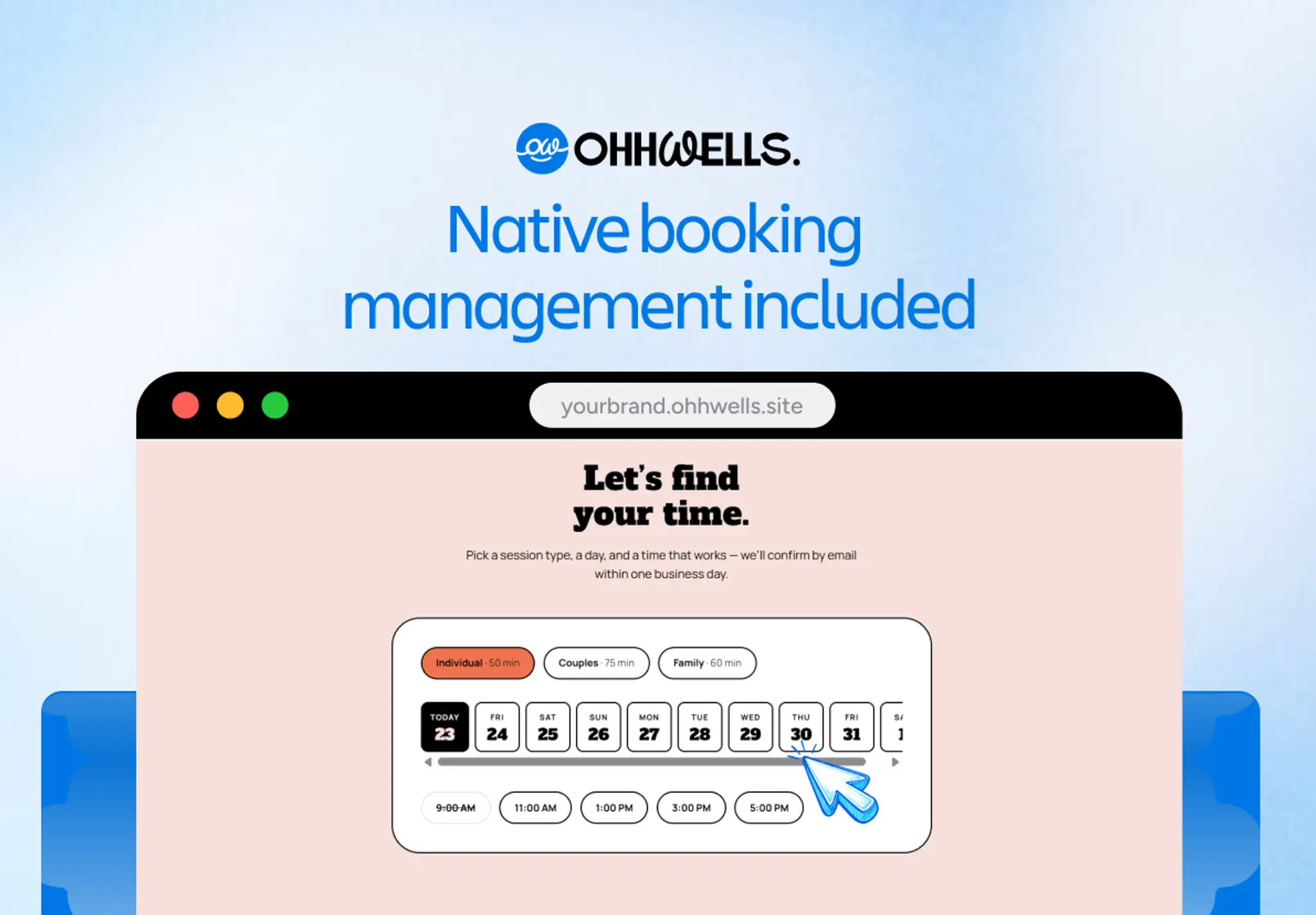
Then add what tokens don't cover: the booking system you build yourself, and the time or the developer to finish and maintain it. With OhhWells, bookings and the Conversion Score are on every tier, and you can publish free before you pay a cent.
"But what about…"
Bolt's free plan is more generous than yours, isn't it? For learning, yes — genuinely. But it caps you daily, brands your site, and what you're building toward is still a codebase you have to finish. Our free plan is smaller in scope and bigger in outcome: a real, published, bookable website. Different kind of free.
I've already built most of it in Bolt. Then you've done the valuable part — you know exactly what you want. Bring the copy and images across and rebuild it free, in parallel. Keep the Bolt project; nobody's asking you to bin it.
Can't I just add bookings in Bolt? You can — it's full-stack, that's its strength. It means Stripe, a database, auth logic, and owning all of it forever. If that sentence sounded fine, you're technical enough for Bolt and you should stay. If it made your stomach drop, that's why this page exists.
Isn't OhhWells just less powerful? Yes, deliberately, in every direction you don't need. Bolt can build almost anything. We build one thing properly: a beautiful site for a service business that gets found and gets booked.
What if I outgrow it? If you're heading toward a real application — accounts, custom logic, a product rather than a site — we'll say so honestly. That's Bolt's job, not ours.
OhhWells is built for you if you…
- Run a service or booking-based small business — a studio, a practice, a salon, coaching
- Want a finished website, not three weeks stuck at 80%
- Need bookings, editable copy and to be found on Google, not a codebase to look after
- Want a fixed monthly cost that doesn't rise as your site grows
Stick with Bolt if you…
- Are technical, or have someone who is
- Are building an app or an MVP, not a small business website
- Want the full stack — database, auth, custom logic — and know what to do with it
- Want the code, and a tool that gets you to a working prototype faster than almost anything
Eighty percent isn't a website. Let's finish it.
Build your site free, publish it on an OhhWells subdomain, and check your Conversion Score — all before paying anything. No tokens, no daily cap, no half-built project in a tab.
Compare all plans
Build your site free →